
By the Precisioner Engineering Team
In die casting, surface finishing is never just a downstream operation. It amplifies everything the casting process did upstream—including flow marks, gas porosity, and cold shuts. Why is it that some suppliers deliver die castings that look premium and offer long service life and high durability, while others keep running into color variation, blistering, and even whole-batch scrap?
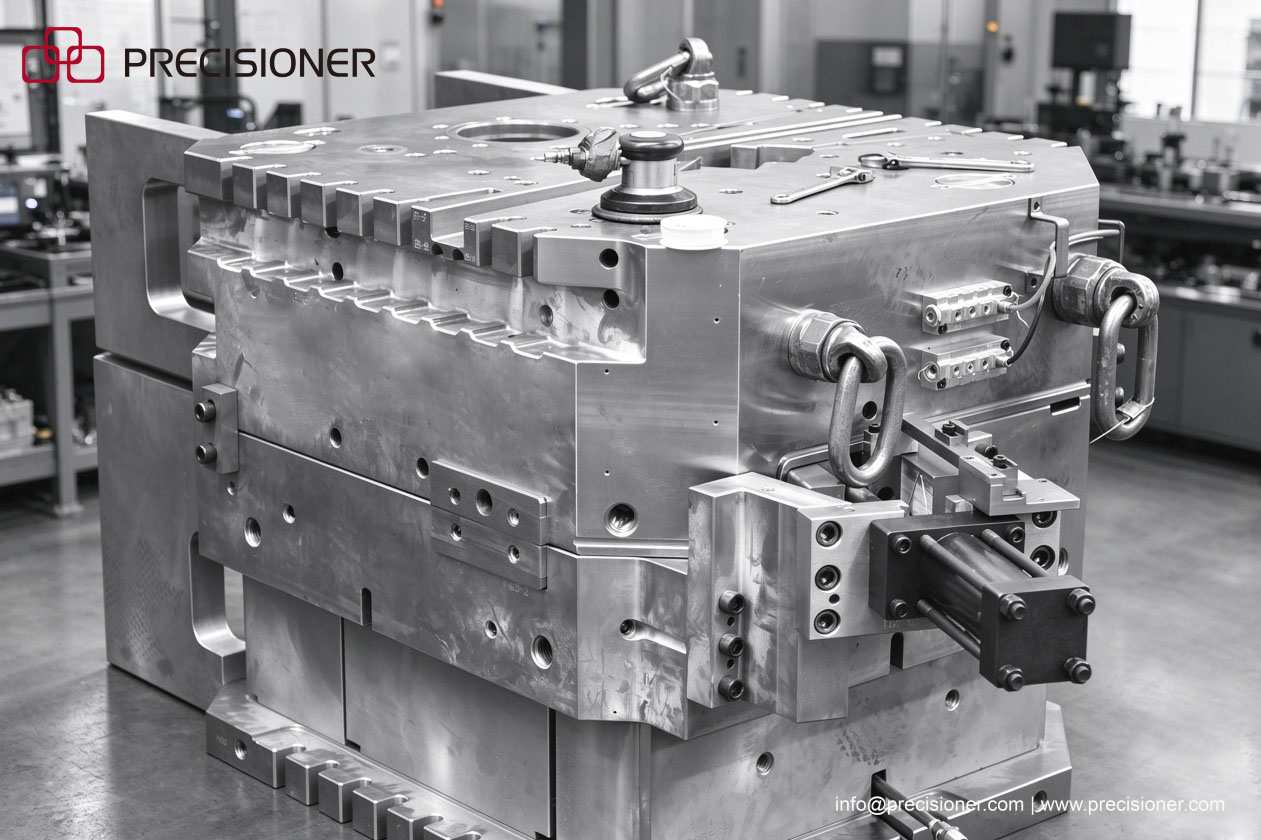
1. Three Main Categories of Surface Finishing
Die-cast components are finished for very different reasons, including outdoor corrosion protection, interior appearance, and electrical or thermal conductivity. Whatever the reason, the processes fall into three main categories.
1.1 Organic Coatings: Where Color and Protection Come TogetherThese processes form a polymer or resin coating on the die-cast surface, delivering both appearance and corrosion protection.
• Powder coating: Electrostatic adhesion followed by high-temperature curing forms the coating. Advantages: Environmentally friendly, thick film, and resistant to wear and weather. Applications: Outdoor cabinets, garden tools, and automotive interior and exterior trim.
• Liquid painting: A liquid coating, such as UV-curable or fluorocarbon paint, is sprayed onto the surface. Advantages: A wide color range and controllable gloss. Applications: Premium home appliances and consumer electronics housings.
• Electrophoretic (ED) coating: An electrochemical deposition process.
Advantages: Coverage with no blind spots and outstanding corrosion protection in internal cavities. Applications: Automotive underbody parts and complex, irregular components, and a commonly recommended, highly efficient corrosion protection route in the new energy vehicle sector.
1.2 metallic and Conversion Coatings: Better Feel and Better Function
These processes create a metallic layer or a conversion film on the casting surface by electrochemical or chemical means.
• Electroplating: A metallic layer is deposited by electrolysis. Advantages: A metallic appearance, together with improved conductivity, wear resistance, and corrosion resistance. Applications: Mainly zinc die castings, such as premium sanitary hardware, automotive badges, and electrical connectors. Note: Electroplating aluminum die castings is difficult and requires special pretreatment such as zincating, and silicon-rich areas and porosity tend to cause peeling and pitting.
• Anodizing (the main form of oxidation treatment): An oxide film is grown electrochemically. Advantages: Corrosion resistance, wear resistance, and dyeability of the film. Applications: Electronic housings and instrument panels made from wrought aluminum alloys such as 6061 and 6063. Note: Because die-cast aluminum alloys have a high silicon content (8%–12%), the oxide film is gray-black, difficult to dye, and limited in adhesion. In practice it is usually restricted to dark colors, mostly black, and it requires strict process control, so it is not recommended for highly decorative exterior parts.
• Passivation / chemical conversion coating: An inert conversion film is formed. Advantages: Normally used as a pretreatment before painting or as a final corrosion protection step. Applications: Automotive frames and complex structural parts.
1.3 Mechanical and Physical Treatments: The Feel That Gives a Product Its Character
These processes do not change the material composition. They reshape the surface by physical means.
• Polishing: Microscopic irregularities are removed by mechanical, chemical, or electrolytic means. Advantages: A mirror finish. Applications: Premium reflective parts and decorative panels.• Brushing: Mechanical friction creates a directional grain. Advantages: A stronger metallic look and better wear resistance. Applications: Phone frames and elevator trim.
• Sandblasting / shot blasting: A blast medium is driven against the surface at high velocity. Advantages: Removes burrs, relieves surface stress, and produces a uniform matte texture. Applications: Pretreatment before painting and masking minor surface defects.
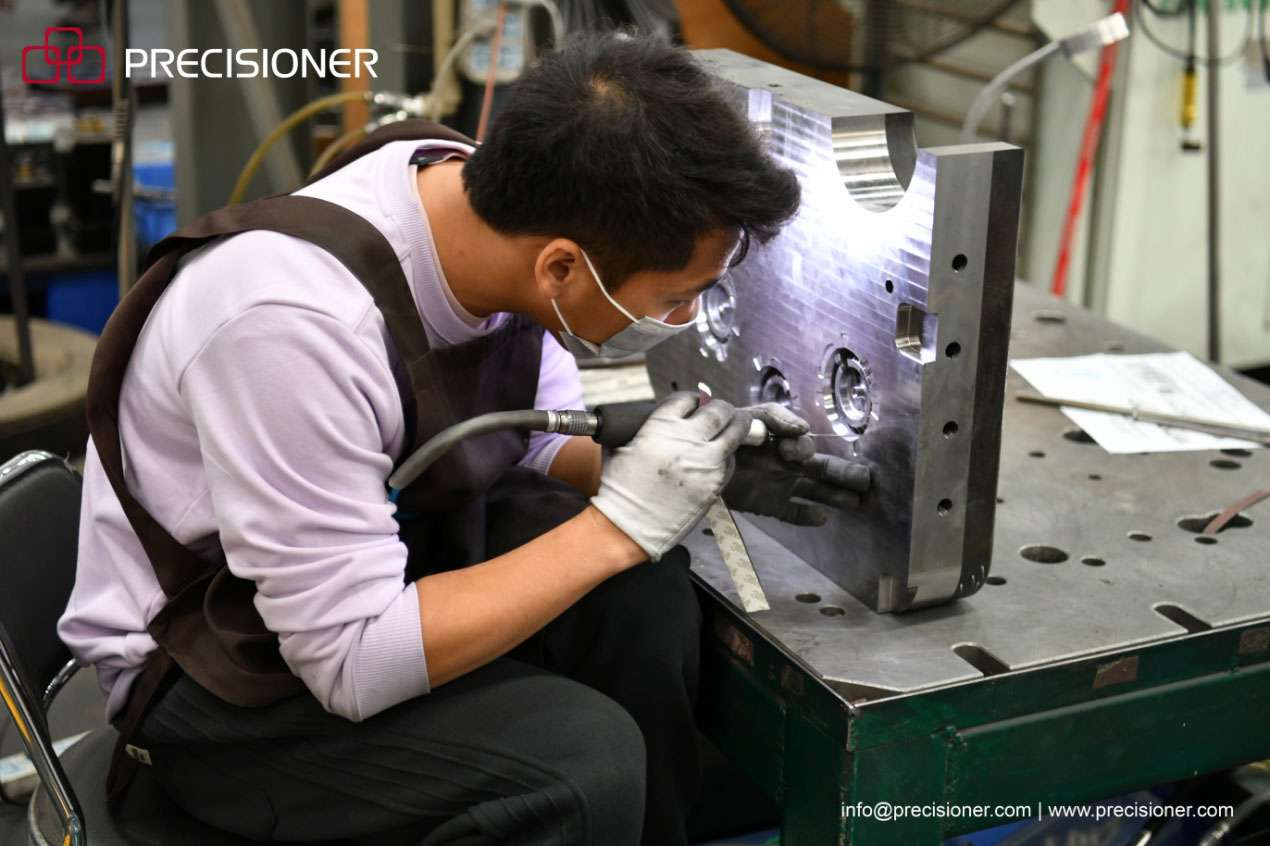
Figure 2. Hand polishing a die insert at Precisioner.
The same finishing process can behave completely differently from one substrate to another. /////confirm/i/i/i/i/i the substrate before choosing the process. This is the step most often overlooked, and the one that causes the most problems.
Powder coating, liquid painting, electrophoretic coating, and passivation are all mature and form the most versatile combination. Anodizing, however, is not friendly to die-cast aluminum: The high silicon content (8%–12%) makes the oxide film gray-black, difficult to dye, and limited in adhesion, so it is normally restricted to dark colors. Electroplating is also difficult and requires special pretreatment such as zincating.
Electroplating is the most mature route, using multilayer copper-nickel-chrome, and it delivers an excellent mirror finish. It is widely used for sanitary hardware, automotive badges, and electrical connectors.
Note: Zinc is chemically active, so pretreatment must not involve prolonged immersion in strong acids or alkalis, which would cause blistering and peeling. Cold shuts, shrinkage cavities, and porosity on the casting surface become visible after polishing and must be dressed before plating.
Magnesium has the lowest density and is a popular choice for lightweighting in the new energy sector. It is, however, chemically very active and has poor corrosion resistance, so it must receive a complete corrosion protection system, combining a chemical conversion film with electrophoretic coating or painting. It cannot be used bare, and its pretreatment requirements are stricter than those for aluminum or zinc.
The table below lists recommended processes and pitfalls by common application, as a first-pass screening aid.
Table 1. Process selection by application.
| Application | Recommended Process | Notes and Pitfalls |
| Long-term outdoor corrosion protection | Powder coating, electrophoretic (ED) coating | ED coating gives the best coverage of internal cavities in complex parts; powder coating offers better weather resistance. |
| Interior and appearance parts | Liquid painting, powder coating | High-gloss appearance parts are extremely sensitive to upstream flow marks and gas porosity, so the raw casting must be controlled first. |
| Electrical conductivity and EMI shielding | Electroplating (zinc substrates) | Electroplating aluminum substrates is difficult and requires special pretreatment such as zincating. |
| Highly decorative mirror finish | Electroplating (zinc), polishing | Highly decorative anodizing is not recommended on die-cast aluminum, because the film turns gray and is difficult to dye. |
| Wear resistance and matte texture | Sandblasting / shot blasting, brushing | Also an effective remedy for masking flow marks and pitting. |
| Magnesium structural parts | Chemical conversion film plus electrophoretic coating or painting | Magnesium is highly active, so a complete corrosion protection system is mandatory and it cannot be used bare. |
3. Pitfall Guide: When Die-Casting Defects Meet Surface Finishing
At Precisioner we often say that good surface finishing is built on a qualified raw casting. If the die-casting process is not well controlled upstream, surface finishing downstream will not hide the defects. It will expose them. Below is a compatibility analysis of three common die-casting defects against different finishing processes.
3.1 Flow MarksFlow marks are surface textures left where the metal did not fuse properly in the cavity, and some processes are extremely sensitive to them.
• Highly sensitive (scrap): Decorative electroplating, anodizing, and high-gloss liquid painting. These processes reproduce flow marks like a magnifying glass, ruining the mirror finish or leaving patchy color.
• Moderately sensitive (depends on the standard): High-gloss or satin powder coating, brushing, and polishing. They may produce slight shading, or add upstream sanding cost.
• Low sensitivity (acceptable): Matte powder coating, sandblasting, and passivation. Sandblasting can even serve as a remedial step to remove flow marks.
These defects originate from die damage or from molten metal washing over the surface, and they appear as surface deformation or craters.
• Highly sensitive (scrap): Decorative electroplating, anodizing, and high-gloss liquid painting. The defects are reproduced precisely or even magnified, causing severe blooming or orange peel.
• Moderately sensitive (hard to save): Polishing to a mirror finish. The cost is very high, the part dimensions may change, and the economics are poor.
• Low sensitivity (effectively masked): Matte powder coating and blasted surfaces. The surface texture blends the defects in, and this is a well-recognized remedy in the industry.
This is usually caused by local die overheating or improper release agent application, which leads to micro-welding between the casting and the die, or to contamination by an oxide layer.
• Highly sensitive (scrap): Electroplating and anodizing. The coating cannot bond at all, and pretreatment can even worsen the corrosion.
• Moderately sensitive (high risk): Powder coating, liquid painting, and electrophoretic coating. Adhesion in the burnt area is close to zero, and the film tends to peel off in flakes.
• Low sensitivity (worth trying): Sandblasting and shot blasting. The defect can be removed by physical abrasion, but only on non-appearance parts.
When a defect appears, the first instinct is to ask whether it can be saved. From a cost and lead-time standpoint, however, preventing defects upstream is far more valuable than reworking them downstream. The table below summarizes defect impact based on our production experience.
Table 2. Defect severity and rework feasibility
Defect Type
Physical and Chemical Nature
Severity for Surface Finishing
Rework Feasibility
Surface burning
Micro-welding between die and casting, or contamination by an oxide layer
Very high (5/5)
Almost zero
Cold shut
metal that failed to fuse, leaving a weak interface with an oxide film
Very high (5/5)
Almost zero
Shrinkage cavity and shrinkage porosity
A network of voids formed by solidification shrinkage, with rough internal walls
Very high (5/5)
Almost zero
Gas porosity and blowholes
Voids formed by entrapped gas, with relatively smooth internal walls
Very high (5/5)
Very low
Erosion, cavitation, and pitting
Surface deformation or geometric damage replicated from die damage
High (4/5)
Moderate (can be sanded locally)
Flow marks
Surface texture from incomplete fusion, with slight compositional variation
Moderate (3/5)
High (can be polished or blasted)
5. Conclusion: Precisioner, Your End-to-End Die-Casting Mold Solutions Partner
The choice of a surface finishing process is never made in isolation. It has to be closely coordinated with product design (DFM), die steel selection, and die-casting parameter tuning.
At Precisioner, we don’t just design and manufacture high-precision HPDC dies—we also provide DFM services from the very start of a project. We proactively assess the risks a part may face during finishing and tightly control casting defects such as flow marks and gas porosity during die trial runs, helping to ensure higher casting yields in painting, plating, and anodizing.
What We Can Do for You
• Surface finishing process selection assessment, by substrate and application
• Defect-to-process compatibility diagnosis for flow marks, gas porosity, cold shuts, and burning• Risk alerts and structural optimization advice at the DFM stage
• Upstream defect control during trial runs
• Product drawings or a 3D model
• Material (aluminum, zinc, or magnesium) and target appearance grade
• Application requirements, such as outdoor corrosion protection, interior appearance, electrical or thermal conductivity, or a highly decorative mirror finish
• Current yield rate and major defects (if any)
Email: info@precisioner.com
Website: www.precisioner.com