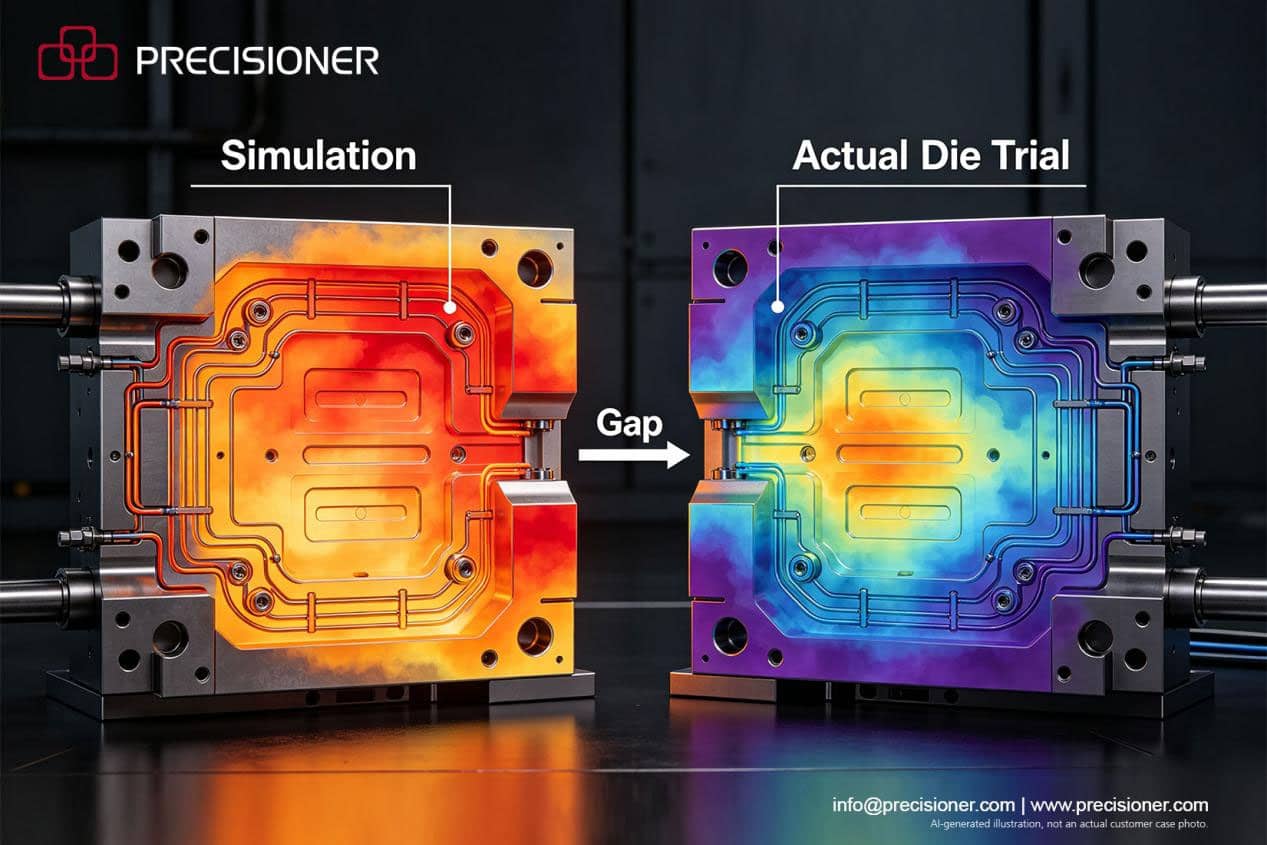



"Simulation results never quite match reality." This common complaint among die-casting companies, however, often masks the true culprit—the issue is rarely the software itself; it almost always comes down to the most overlooked parameter: the interfacial heat transfer coefficient (IHTC) between casting and die.
The same mold with a different release agent can change IHTC by a factor of three. One extra second of spray time can cause a significant jump. Software default values—typically 5,000–8,000 W/(m²·K)—are often estimated rather than measured—and relying on them can lead to misleading process recommendations. In our experience, default IHTC values can cause shrinkage porosity location deviations of 5–15 mm, depending on part size, geometry, and casting process.
At Precisioner, we take a different approach: we don't guess; we measure. With thermocouples embedded in our dies, we have accumulated IHTC data from over 700 dies per year under actual production conditions, and built a reusable parameter library that is directly applicable across a wide range of process windows.
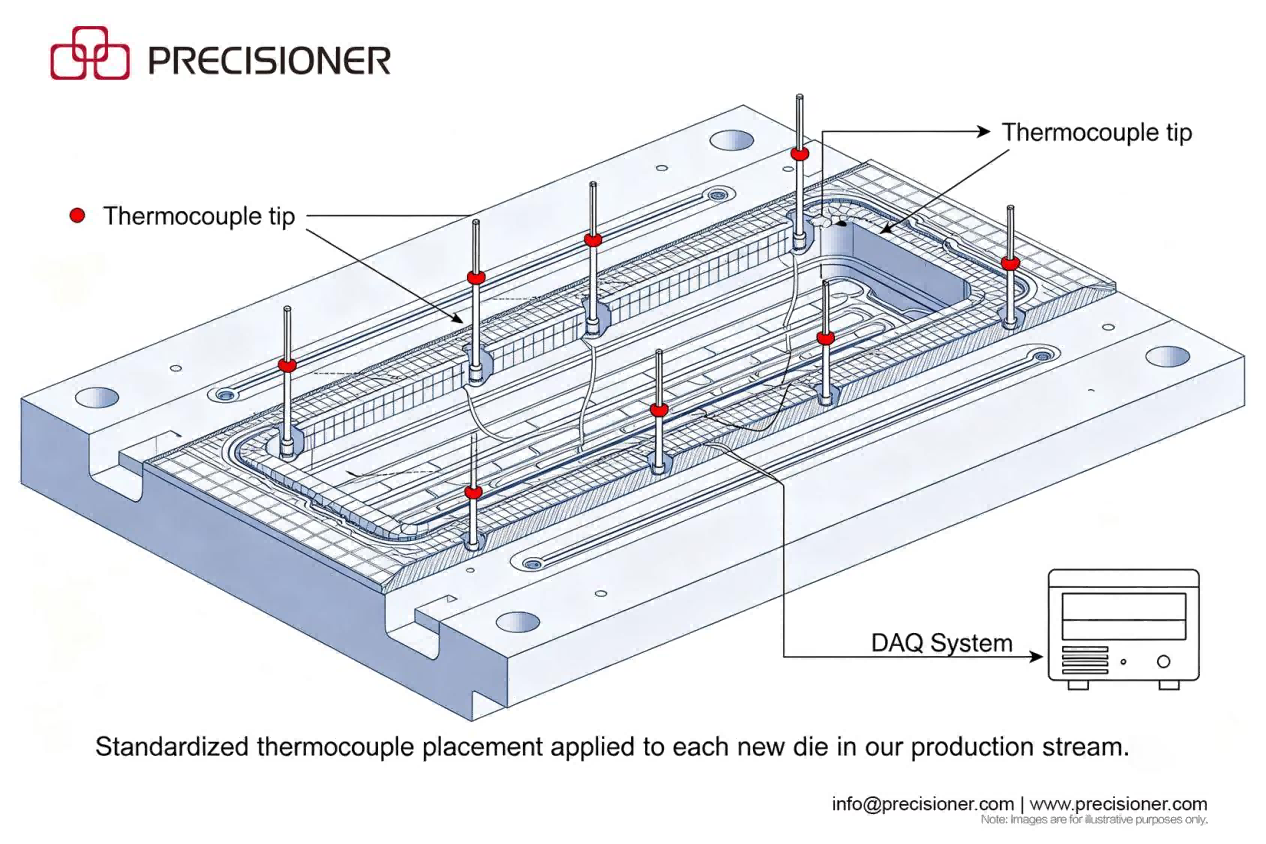
Figure 1: IHTC measurement setup
Body:
What Measured Data Tell Us
IHTC (Interfacial Heat Transfer Coefficient) quantifies the rate of heat transfer per unit area across the casting–die interface per degree of temperature difference, expressed in W/(m²·K).
It is influenced by contact pressure, surface roughness, release agent type and film thickness, and it varies dynamically during the casting cycle.
(Note: The values below are average IHTCs during solidification. Peak IHTC in actual production can reach tens of thousands of W/(m²·K) under pressure, but the average is more representative of overall heat transfer efficiency.)
For the same die, IHTC varies far more than expected under different spray conditions:
1. Water-based release agent, 1.5 s spray: IHTC ≈ 8,500 W/(m²·K)
2. Water-based release agent, 2.5 s spray: IHTC ≈ 11,500 W/(m²·K)
(Note: IHTC increases with spray time only within a specific film thickness range where uniform coverage improves real contact area; beyond this range, excessive film acts as insulation and reduces IHTC.)
3. Spray with additional blow-off: IHTC drops to 6,500 W/(m²·K)
4. Oil-based release agent: IHTC ≈ 4,200 W/(m²·K)
5. No spray (first few shots): IHTC only 1,800 W/(m²·K)
A Case That Saved a Customer from Costly Trial-and-Error
Case study: an aluminum alloy bracket (A380, ~2.3 kg). The initial simulation predicted shrinkage at the rib root, but the actual trial casting showed a deviation of about 15 mm—a problem that would have required several die modifications to resolve under the conventional approach.
We retrieved the temperature profiles recorded by embedded thermocouples during that trial, back-calculated the actual IHTC value under those operating conditions—9,500 W/(m²·K) instead of the software default of 6,000 W/(m²·K)—and ran a second simulation. The predicted shrinkage location then matched the X-ray inspection results within 2 mm. based on the calibrated result, we revised the cooling channel layout. The subsequent trial met the quality targets in the first batch: Porosity dropped from 4.5% to 0.6%, with no increase in cycle time and no additional die-modification cost for the customer.
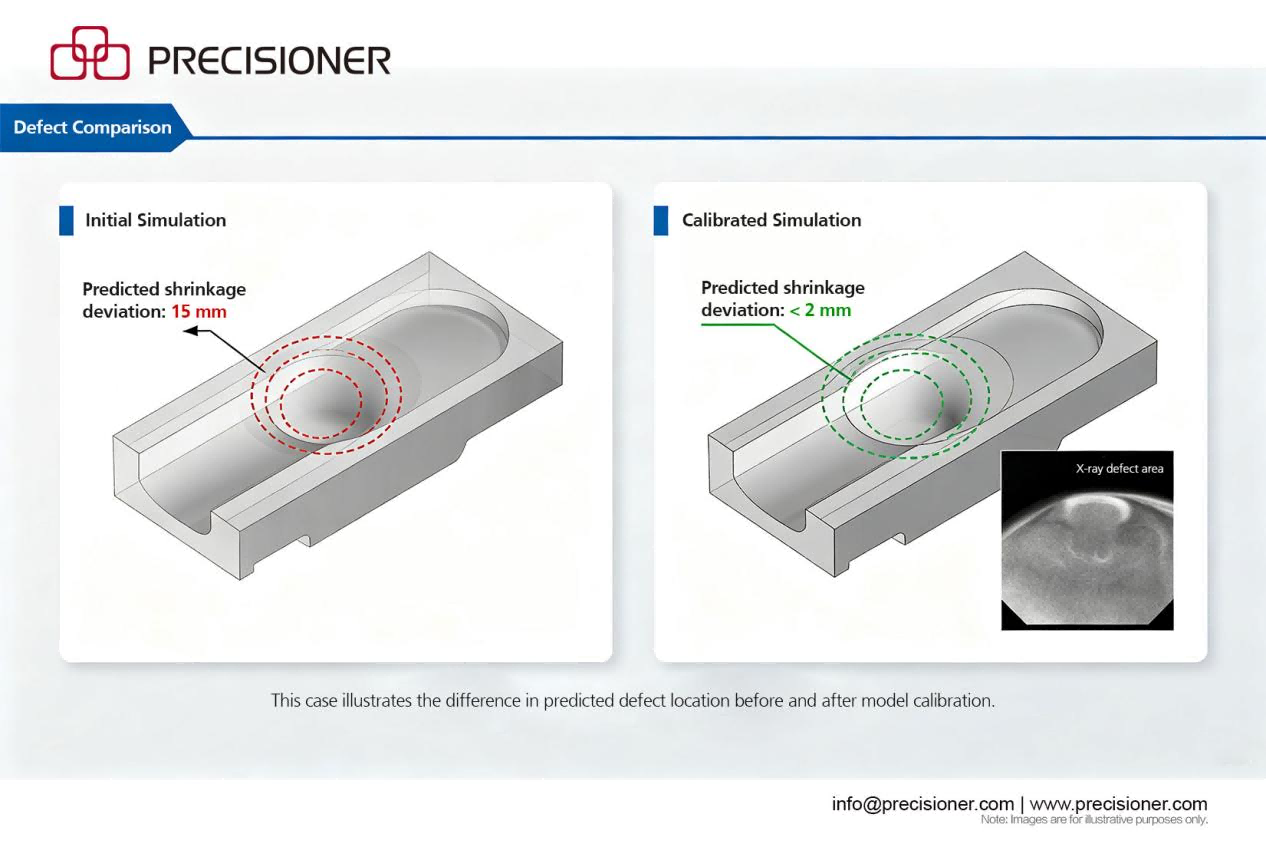
Figure 2: Case study porosity comparison
What You Get Is More Than a Report
Every simulation report delivered by Precisioner includes a complete boundary-condition specification table—clearly stating whether each IHTC value is a default or measured value, which trial data it is derived from, and how key parameters were determined. You can use this to verify simulation credibility and for internal reviews.
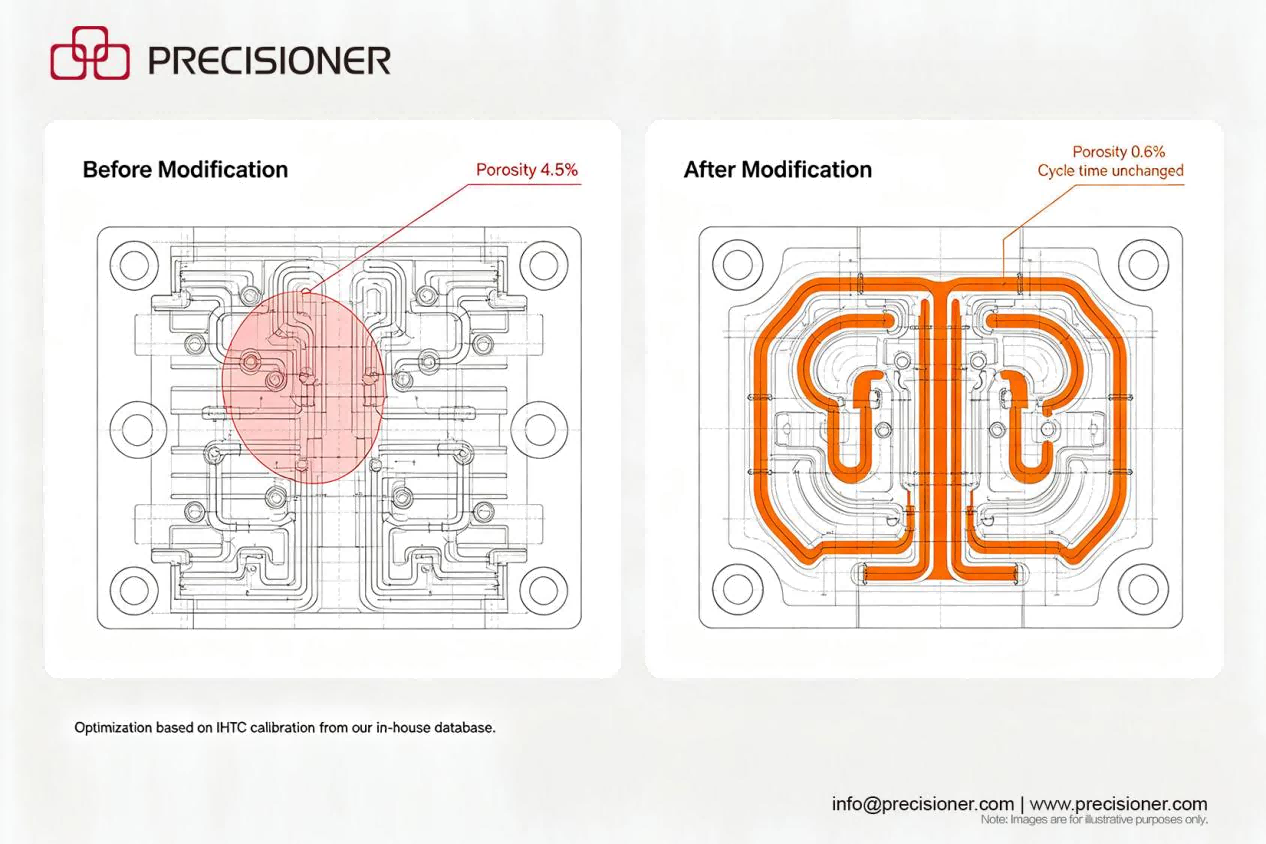
Figure 3: Boundary-condition specification table
Our Perspective
IHTC calibration has long been the "least certain step" in our industry. But we believe that no customer should have to start from scratch every time. Backed by production data from over 700 dies per year, our database is continuously updated with real-world measurements across a wide range of materials and process conditions. We are committed to applying this accumulated knowledge to every new project, helping you reduce trial runs and shorten development cycles.
Conclusion
Key Takeaway: Default IHTC is a guess; measured IHTC is an investment that pays off in the first trial.
The interfacial heat transfer coefficient is one of the most critical yet often underestimated parameters in die-casting simulation. Relying on software defaults can lead to significant deviations in shrinkage prediction and cooling performance. Measured IHTC data from real production, combined with systematic calibration methods, provides a reliable path to simulation accuracy. By building and maintaining an IHTC database across production conditions, engineers can move beyond trial-and-error and deliver robust process solutions in fewer iterations.
If you are struggling with simulation accuracy for complex parts, or have questions about cooling and shrinkage issues, we invite you to consult our engineering team. We will check whether our database already contains a ready-made solution for your process conditions—and if not, we will calibrate one for you.
info@precisioner.com
--- Precisioner Engineering Team