



By Precisioner Engineering Team
In high-pressure die casting (HPDC), surface damage near the gate is often assumed to be erosion. In this case, MAGMASOFT simulation showed that cavitation was the more likely mechanism—and led to a sprue redesign that successfully prevented recurrence in production.
Erosion vs. Cavitation
To address the root cause, we must first distinguish between the two primary mechanisms of surface damage:
Erosion–corrosion: Combined mechanical wear and chemical corrosion on the die cavity surface—especially at gates, cores, and sharp corners—caused by high-velocity, high-pressure molten metal.
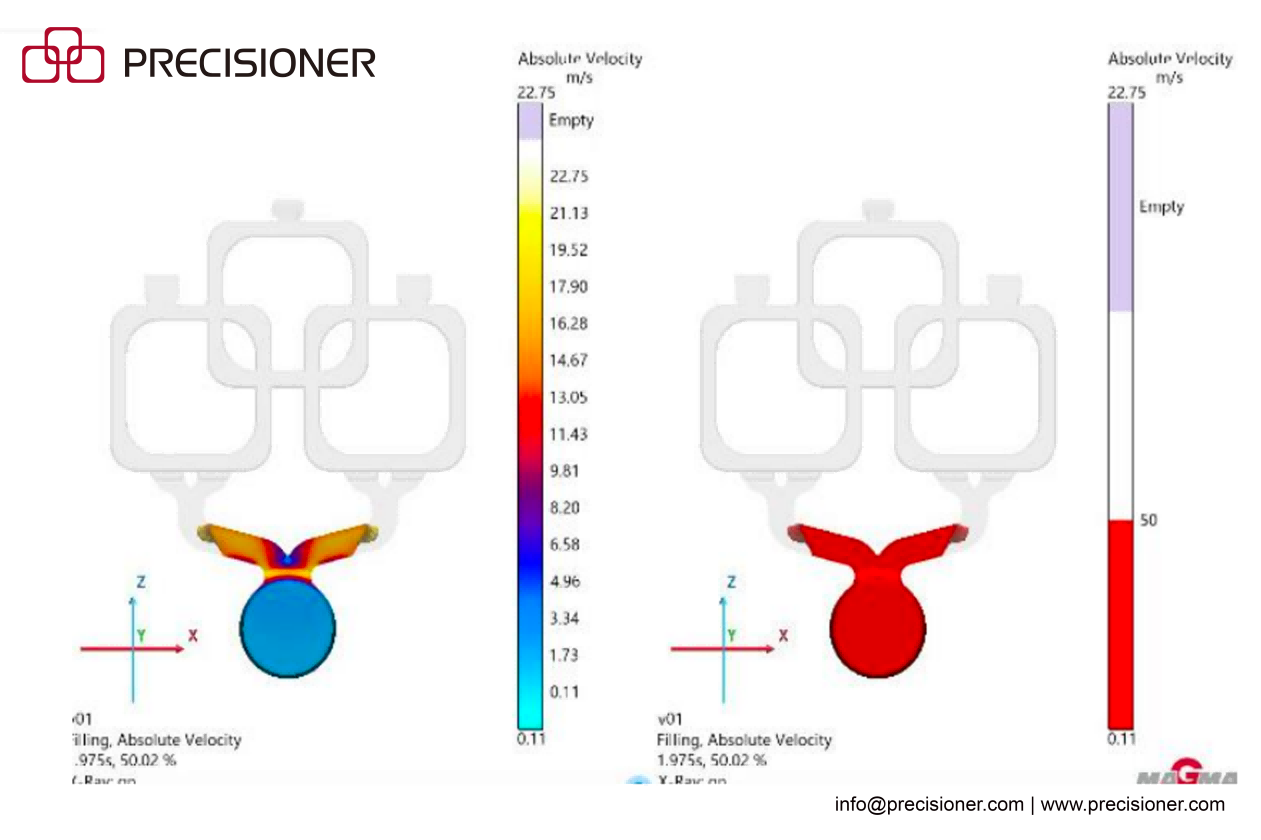
Cavitation: When local pressure in the moving melt drops below the vapor pressure, vapor/gas cavities form. When these cavities collapse against a solid surface, the released implosive energy creates surface pits.
Simulation workflow
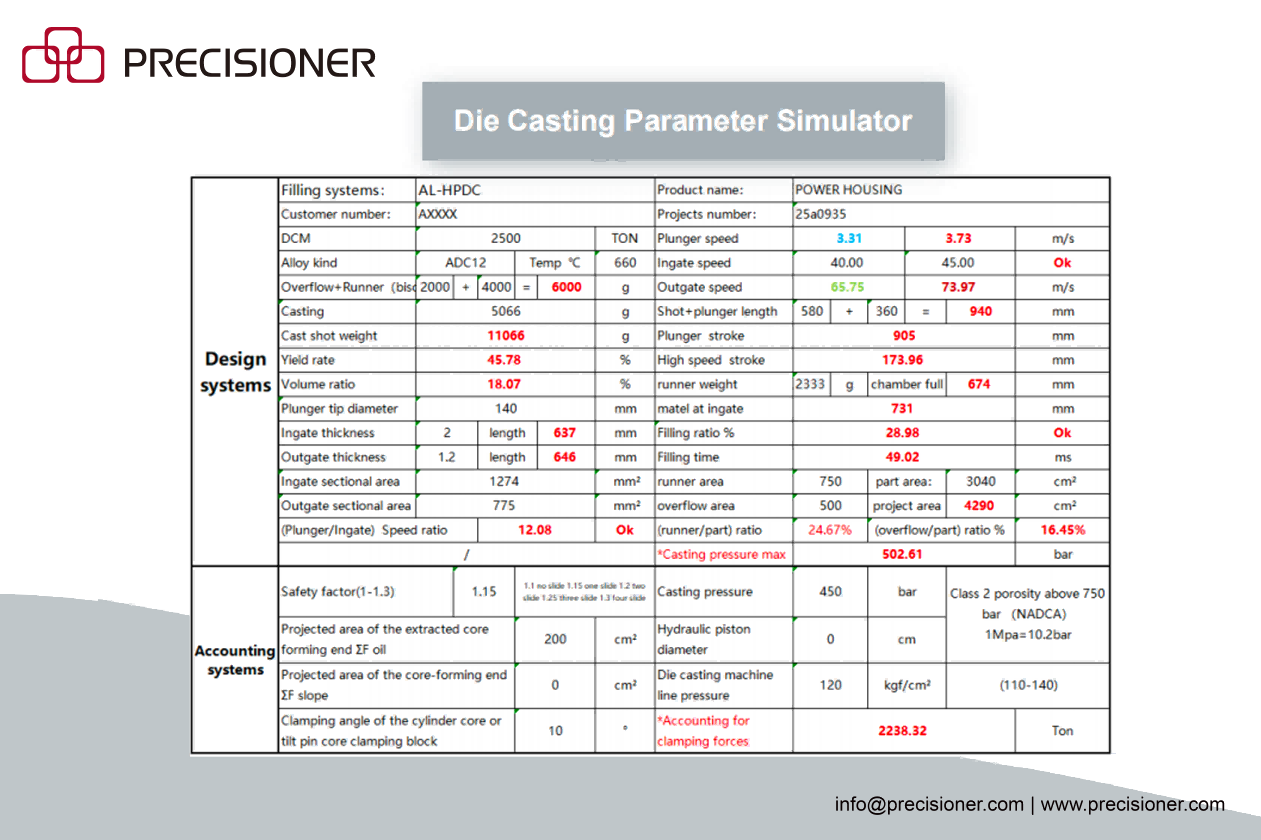
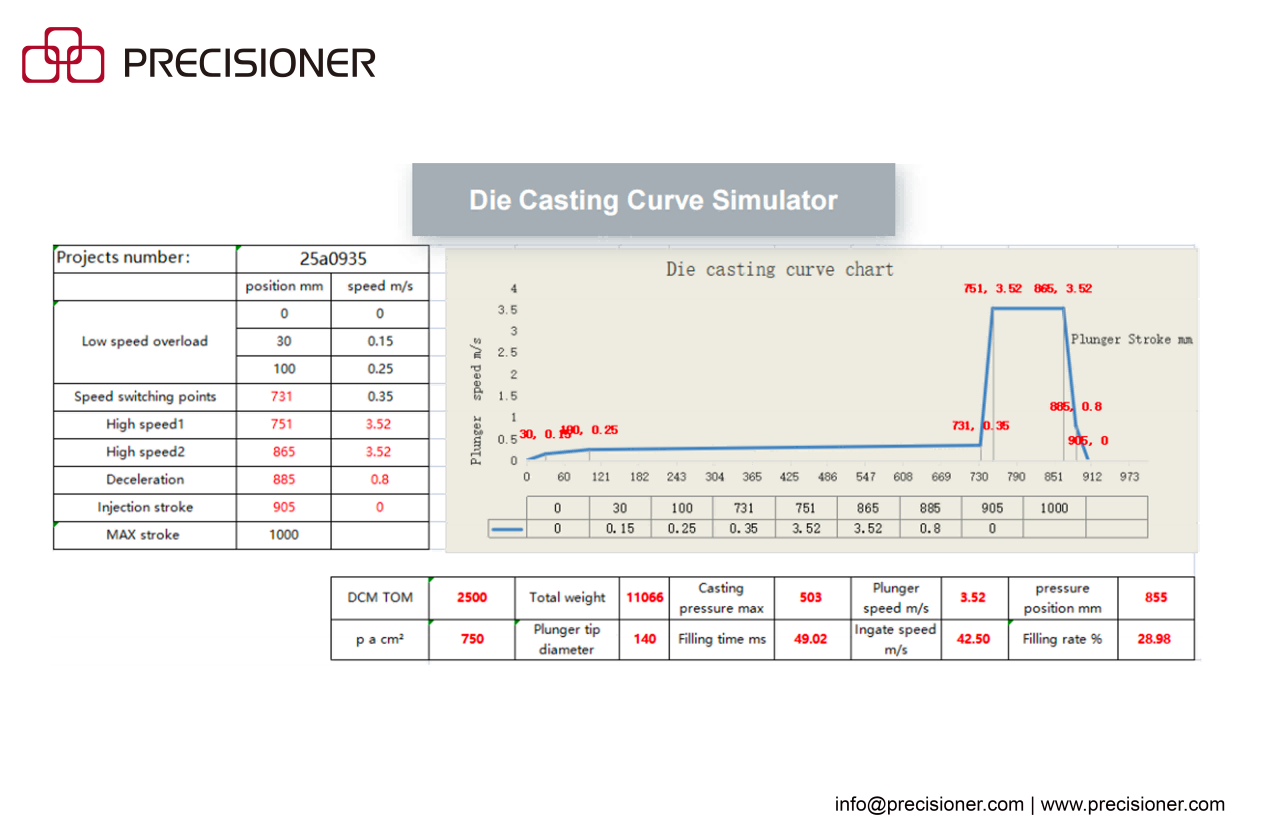
During preliminary design, key die parameters are derived from the layout and physical properties of the mold. We used the Die Casting Parameter Simulator and Curve Simulator to derive optimized machine parameters. These were provided to trial technicians to ensure controlled filling and prevent erosion caused by high gate velocity.
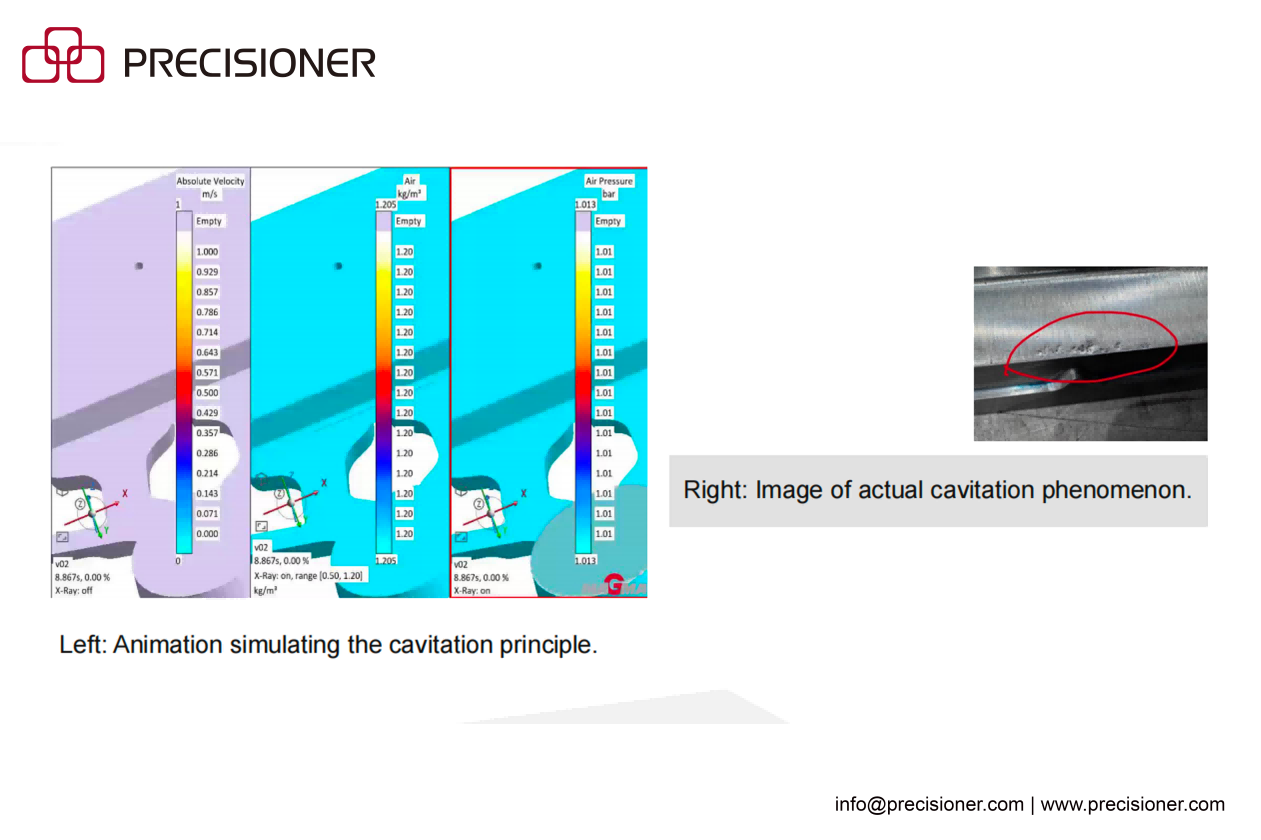
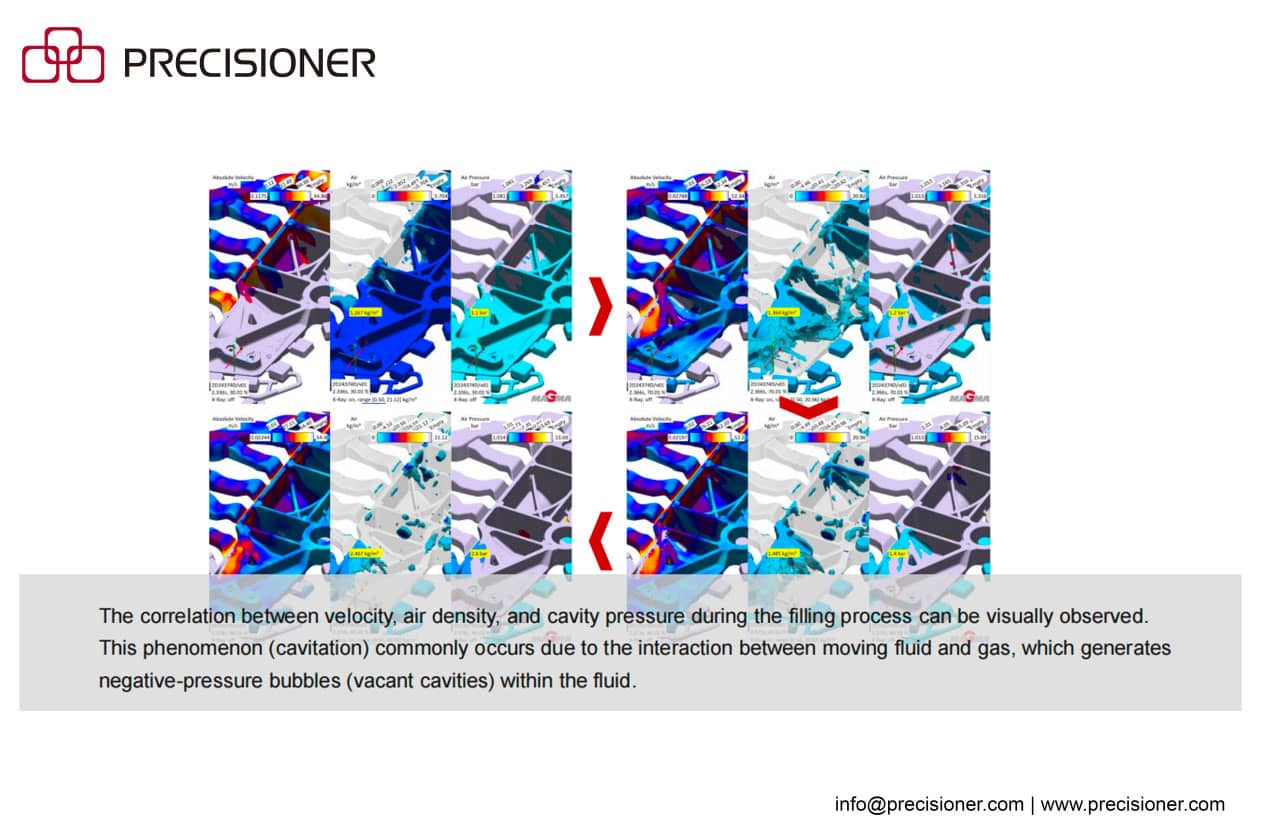
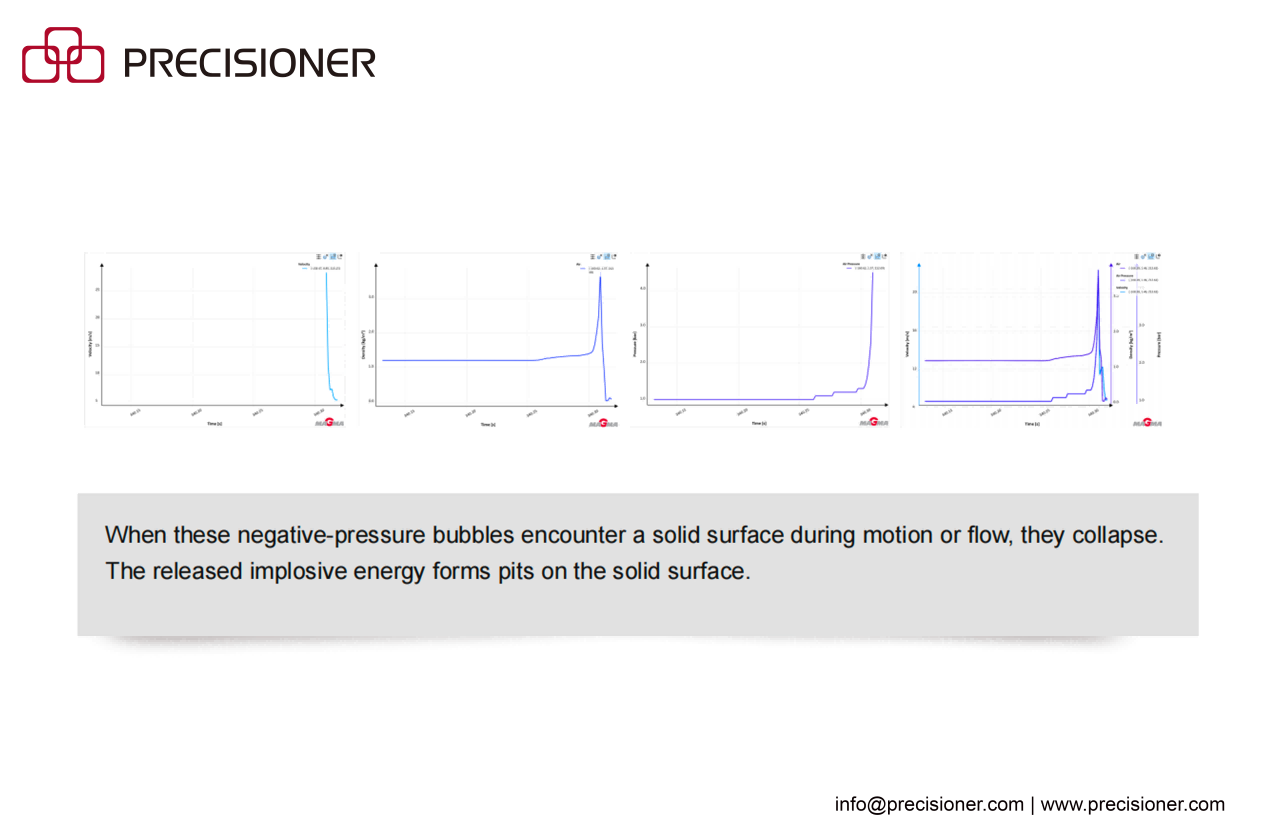
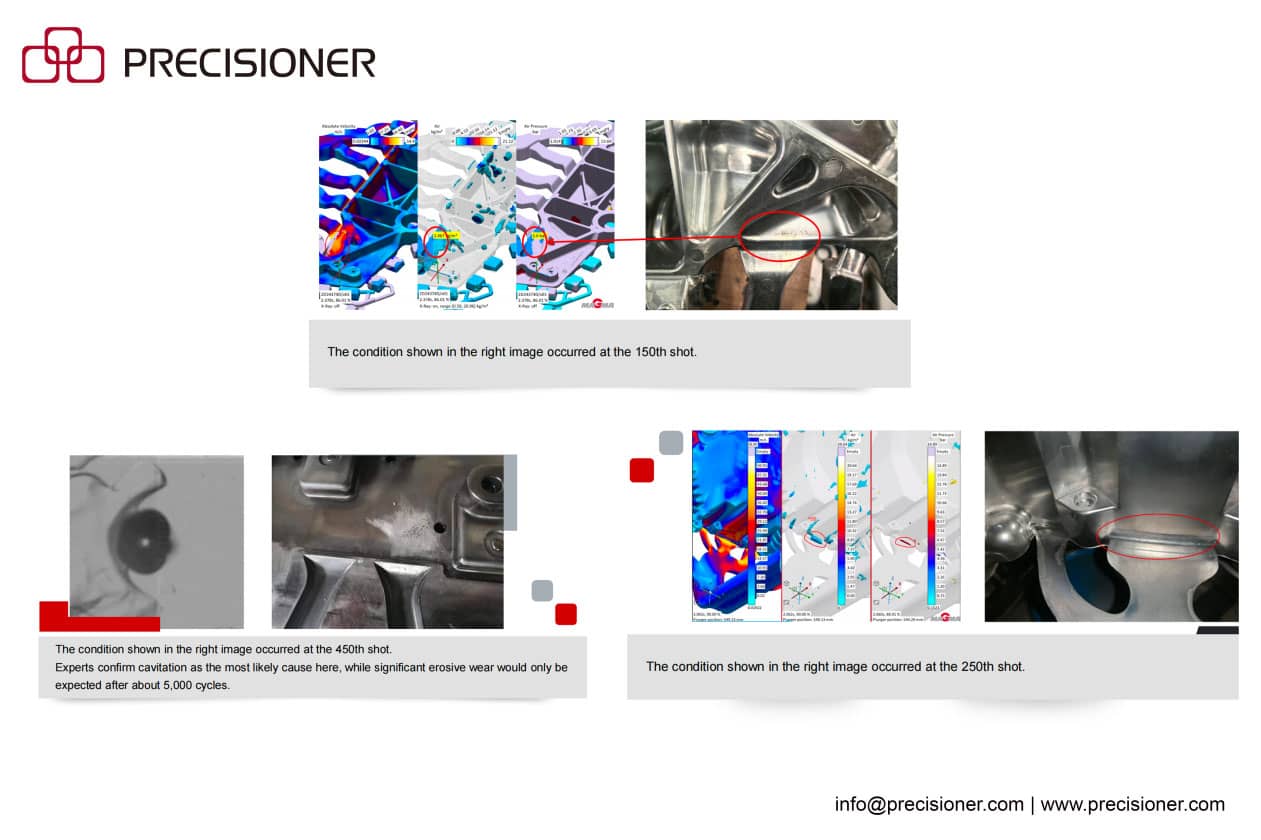
Subsequently, in MAGMASOFT, we correlated absolute velocity, air density, and air pressure at a specific monitoring point during the filling process.
Case study: engine mounting bracket
Project Background
Customer Simulation Verification (3rd-Party Software)
Die Layout Drawing //confirm/i/iation
Handover to Precisioner for Manufacturing
At the designated monitoring point, the aluminum melt’s fill percentage increased from 30% to 86% between 2.336 ms and 2.378 ms. This phase was characterized by an incomplete filling state with air gaps.
The combined analysis of velocity, air density, and air pressure made the cavitation mechanism clearly visible. During this stage, the air density in the cavity ranged from 1.267 to 2.466 kg/m³, while the air pressure in the cavity ranged from 1.1 to 2.6 bar.
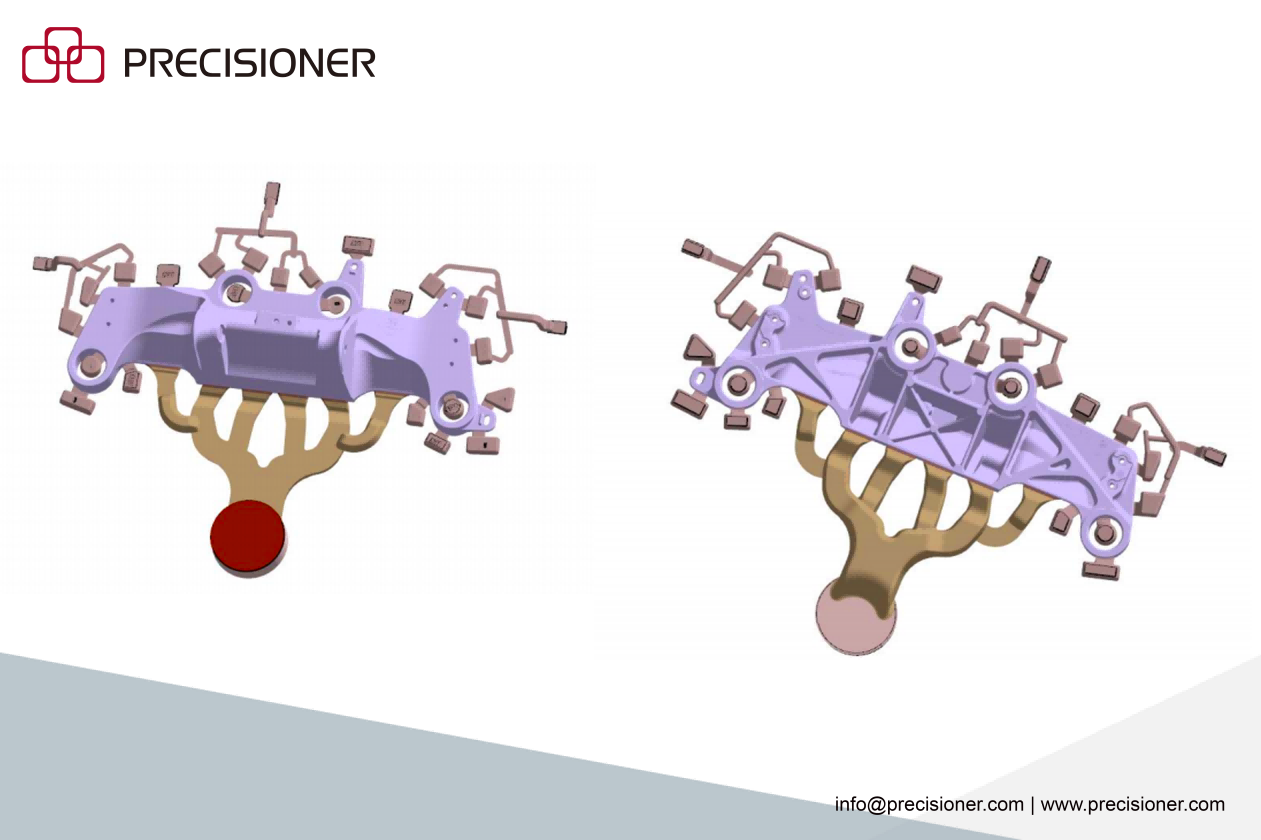
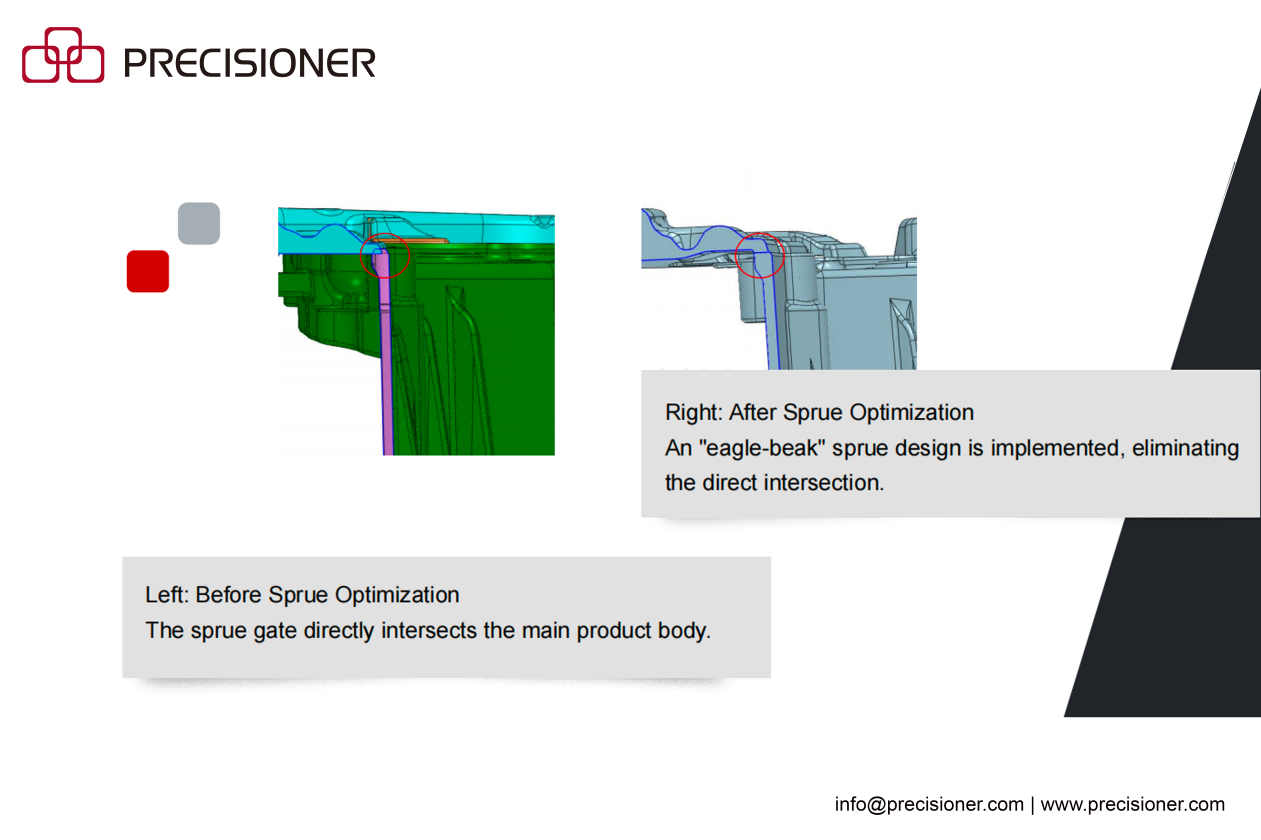
The sprue angle created filling voids at the gate–product junction. These voids developed into low-pressure cavities/bubbles. During final filling, the cavities collapsed, and their implosive energy pitted the surface.
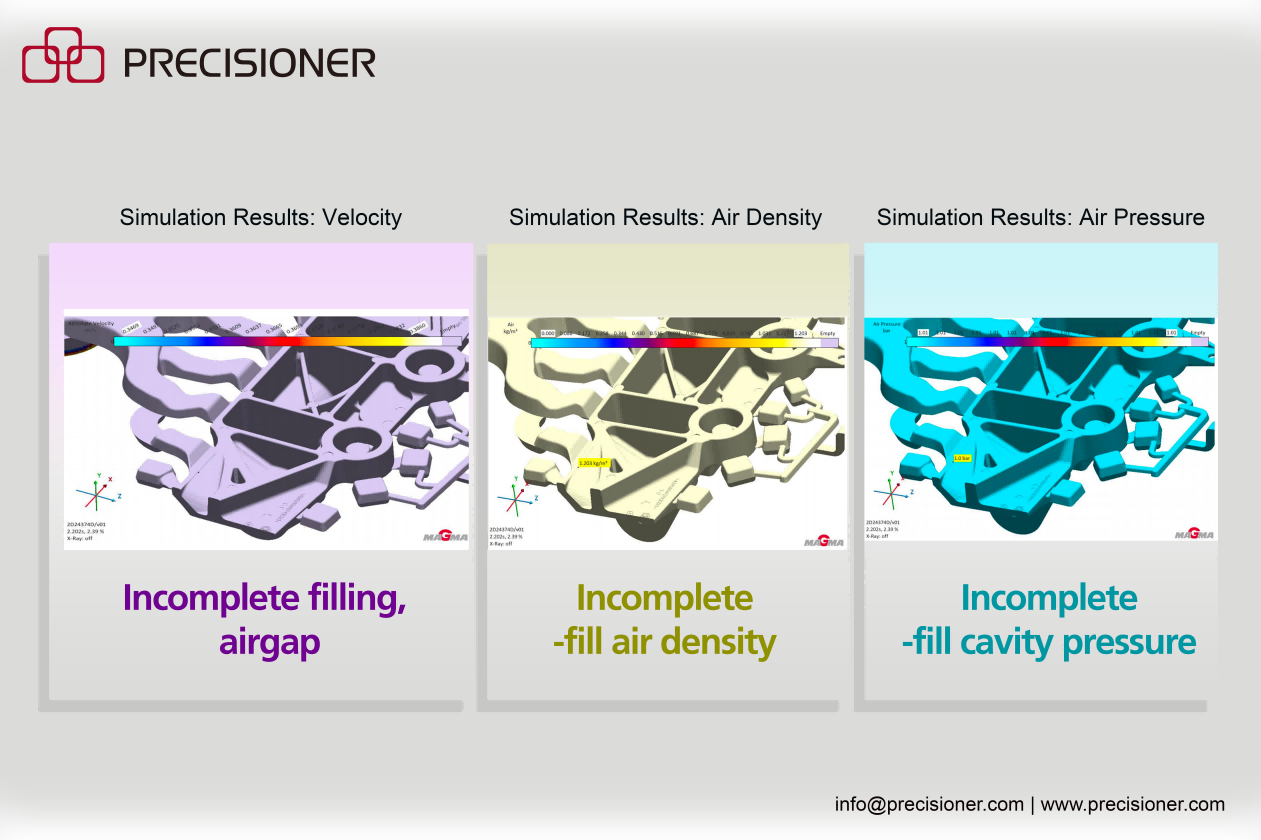
Production evidence
Damage was observed on the inserts at the 150th, 250th, and 400th shots. Experts //confirm/i/ied cavitation as the most likely cause, noting that significant erosive wear would only be expected after about 5,000 cycles.
Optimization and Validation
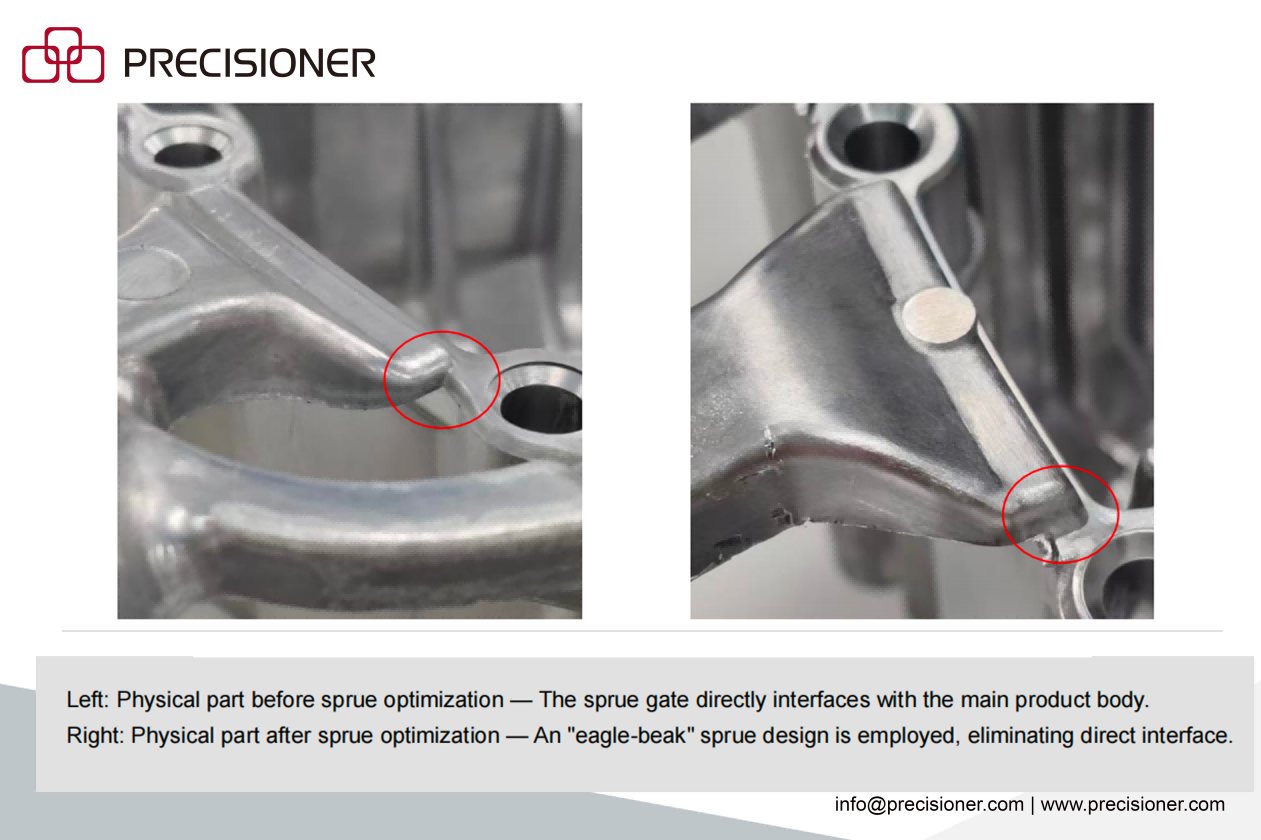
The sprue was redesigned with an “eagle-beak” geometry, eliminating the direct intersection between the sprue gate and the main product body. Post-optimization simulation showed no gas trapped on the mold steel surface; instead, the gas was carried into the final casting.
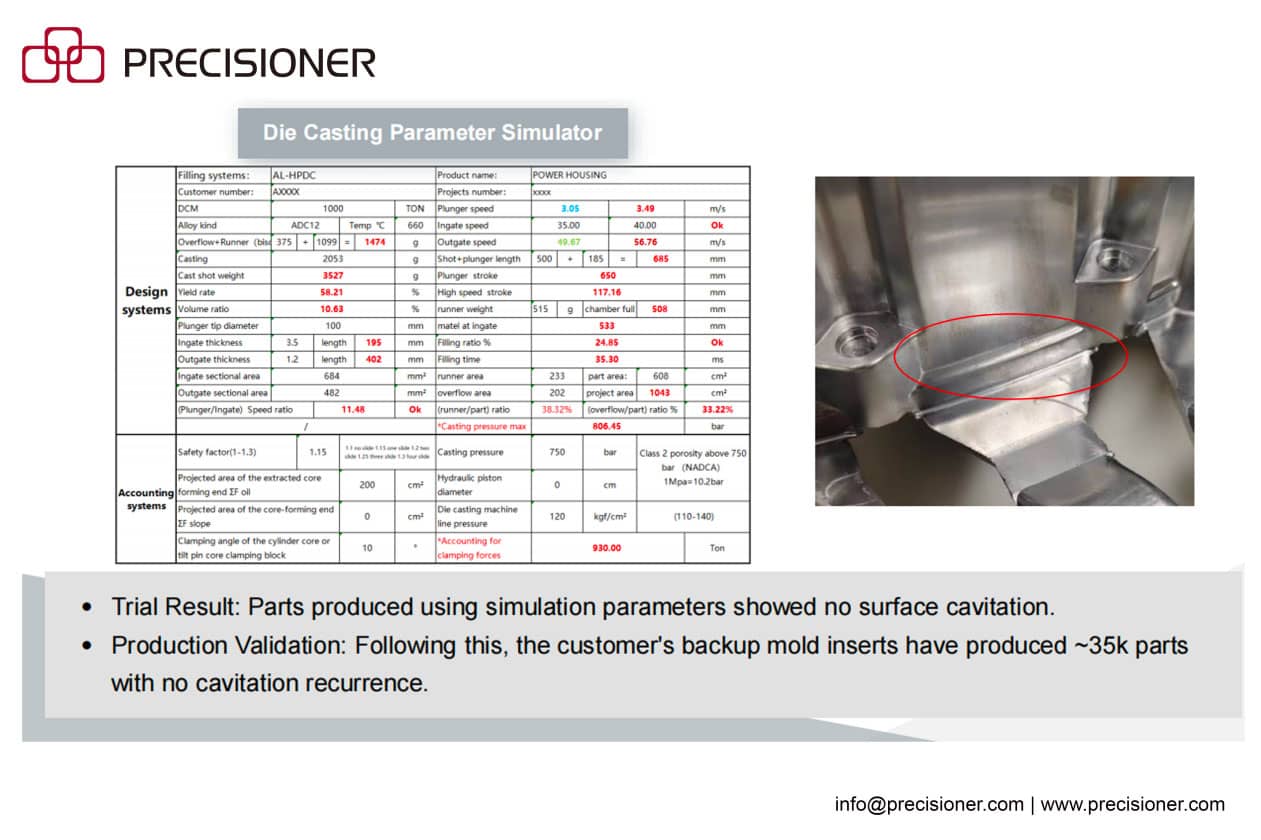
Production validation: Following this, the customer’s backup mold inserts produced approximately 35,000 parts with no cavitation recurrence.
Cavitation is a filling and geometry issue, not only a die-life issue. Correlate velocity, air density, and air pressure in simulation; validate against shot-based evidence; optimize the sprue; and lock the process parameters.
Precisioner specializes in die-casting mold solutions for aluminum, magnesium, and zinc alloys, serving clients in 30+ countries and regions with a technical team of 160+.
Email: info@precisioner.com
Website: www.precisioner.com