


Author: Precisioner Engineering Team | High-Pressure Die Casting Mold Specialists
Introduction
Flash occurs when local contact pressure drops below melt pressure. But why does simply increasing clamping force often fail?
Body:
Flash is directly caused by local contact pressure on the parting line falling below the local cavity pressure. Simply increasing clamping force does not linearly reduce flash, because elastic deformation of the mold frame, plates, and tie bars absorbs much of the added force.
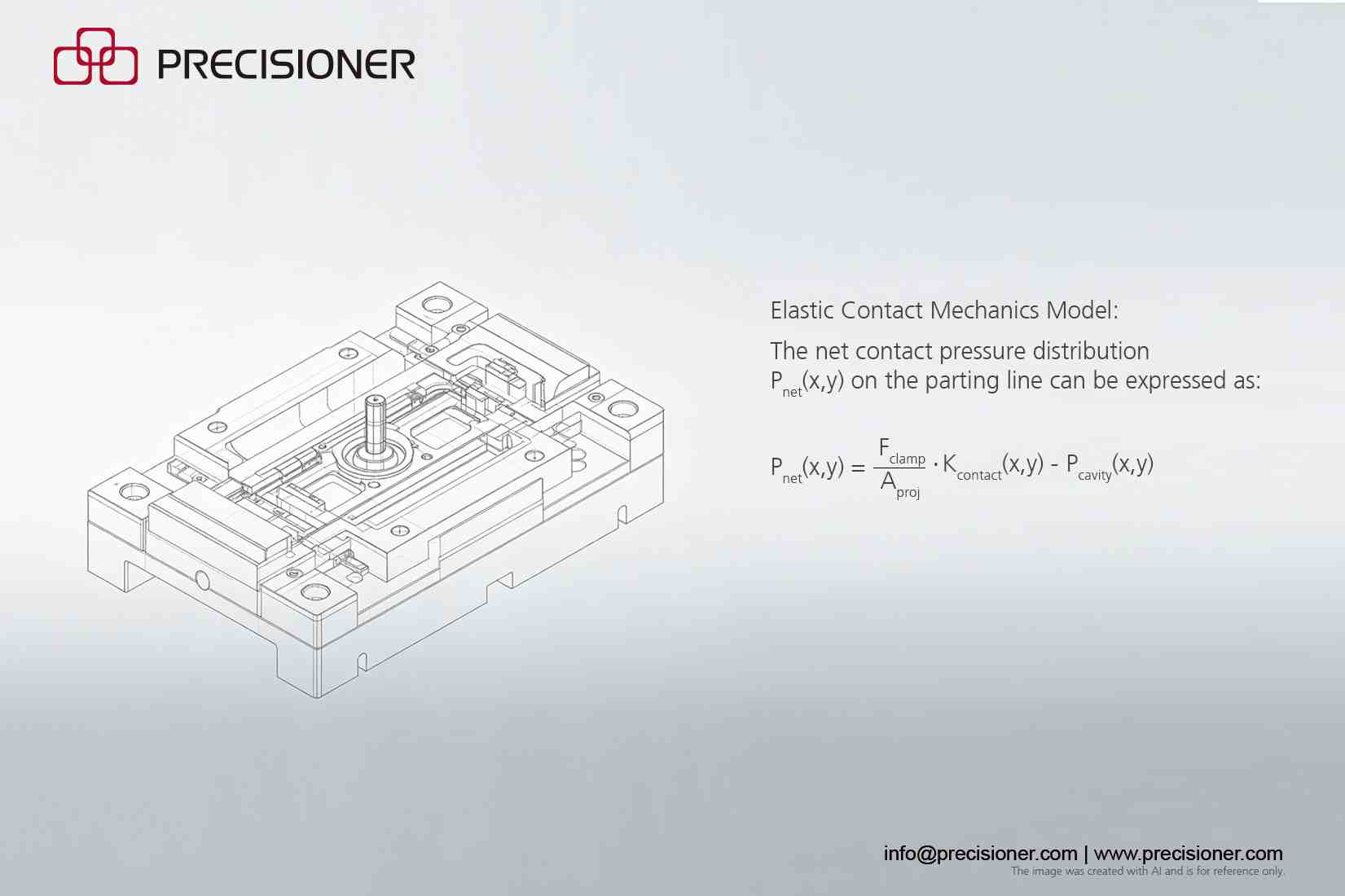
where Kcontact is the local contact stiffness coefficient, which depends on plate thickness, tie bar preload, mold height, and guide clearance. Engineering measurements show: Kcontact≈0.9–1.0 in the central region, ≈0.4–0.6 at the edges, and as low as 0.3 at the corners.
Measurement Method:
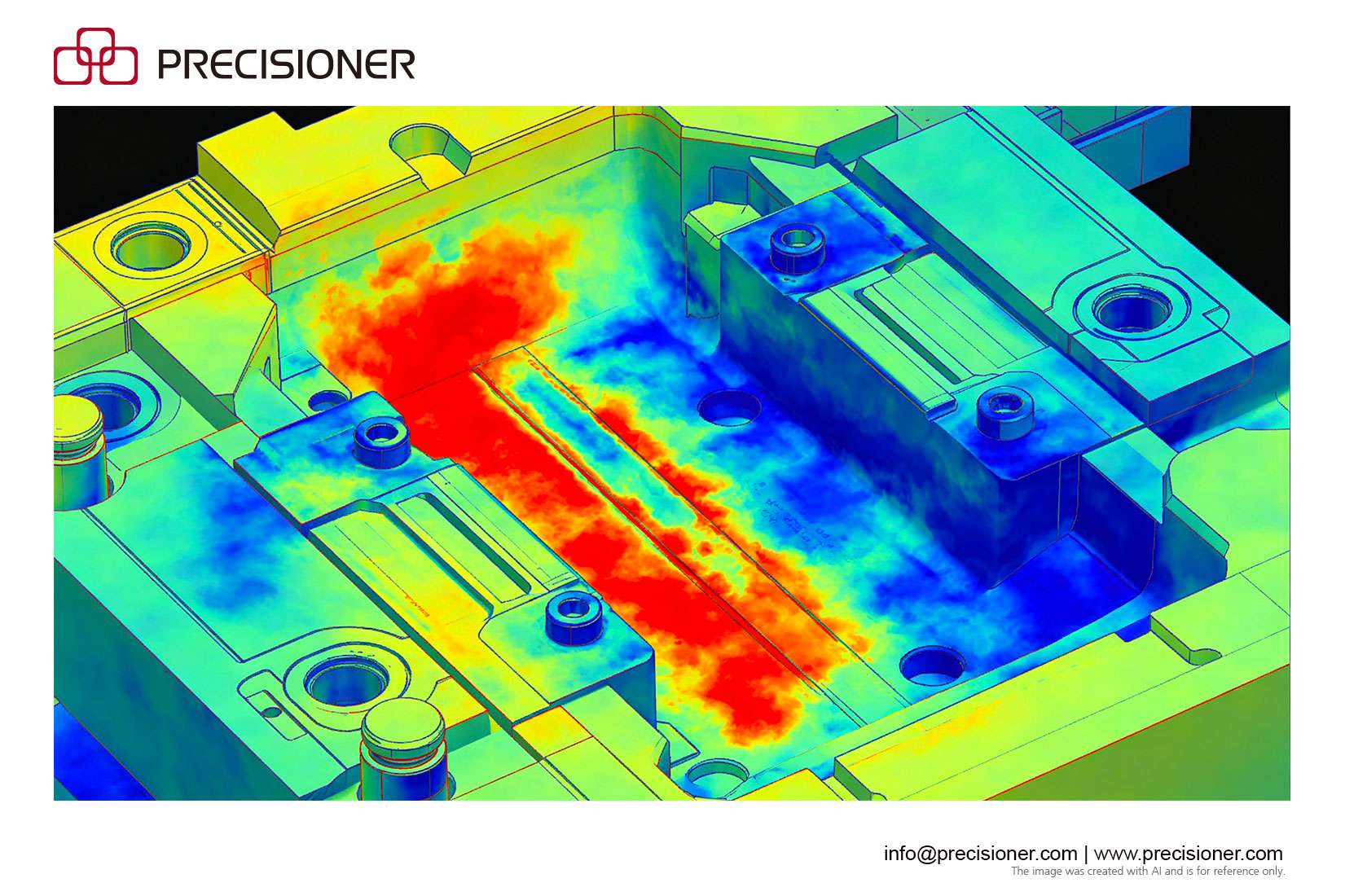
Pressure-sensitive film (e.g., Fuji Prescale, range 40–200 MPa) directly provides a pressure map of the parting line. Research at Precisioner has shown that when tie bar preload deviation exceeds 10%, the edge pressure can drop by an additional 15–20%.
Design Guidelines:
· Apply tie bar pre-torque in three steps following a diagonal sequence; final deviation ≤5%
· Platen parallelism shall be better than 0.03 mm per 1000 mm
· The area where pressure is below 60% of the average shall not exceed 15% of the total projected area
· For molds with clamping force >1000 tons, a multi-point independent locking system is recommended
Case data:
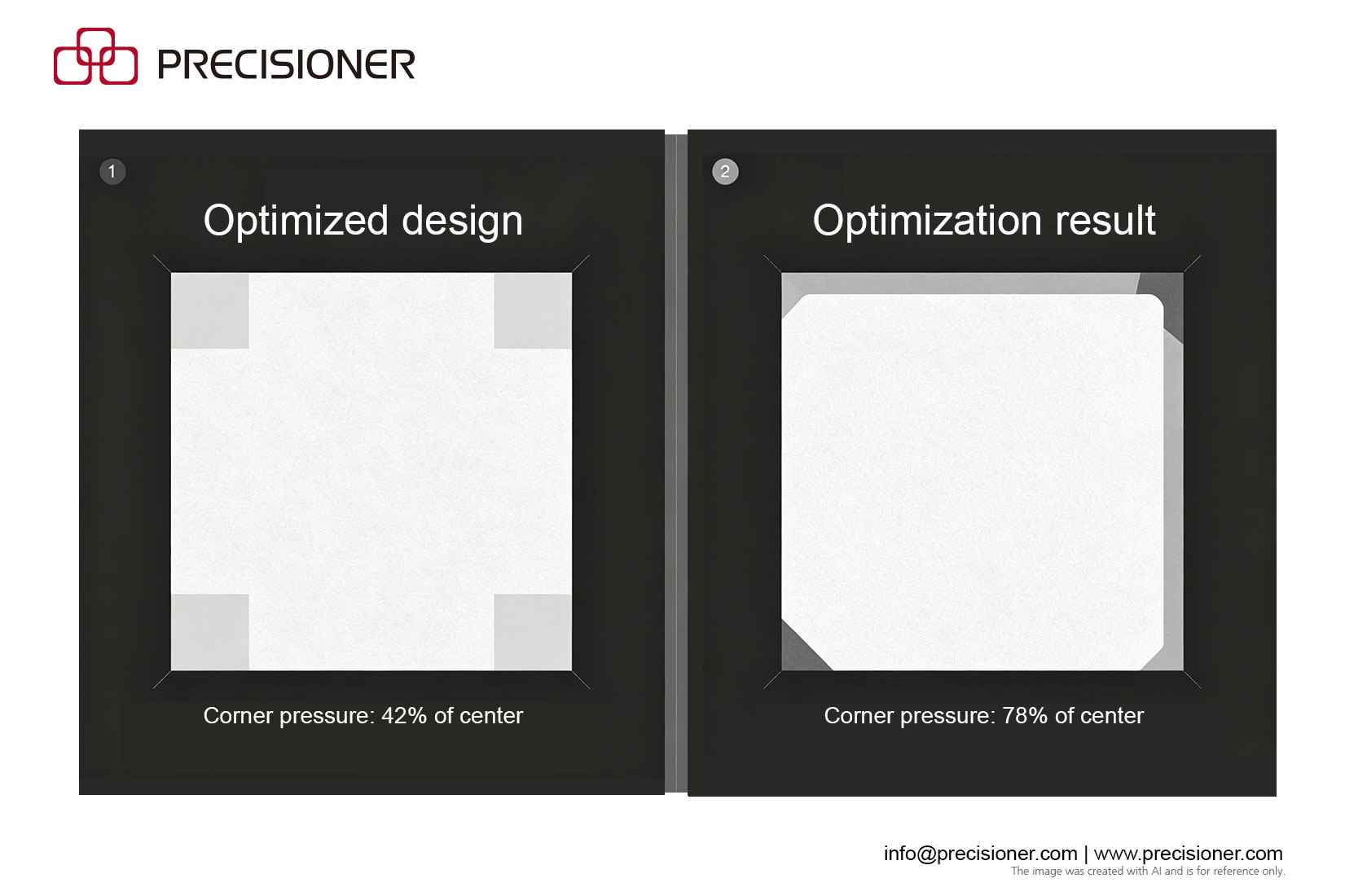
An 800-ton mold had a flash rate of 4.2%. Pressure-sensitive film showed that corner pressure was only 42% of the center value. After increasing the tie bar pre-torque from 600 N·m to 750 N·m and redistributing the tightening sequence, corner pressure rose to 78% of the center value, and flash rate dropped to 0.8%.
Note: The following data is compiled from pressure film measurements taken across more than 200 production molds. These are empirical values observed in real production conditions, not theoretical predictions.
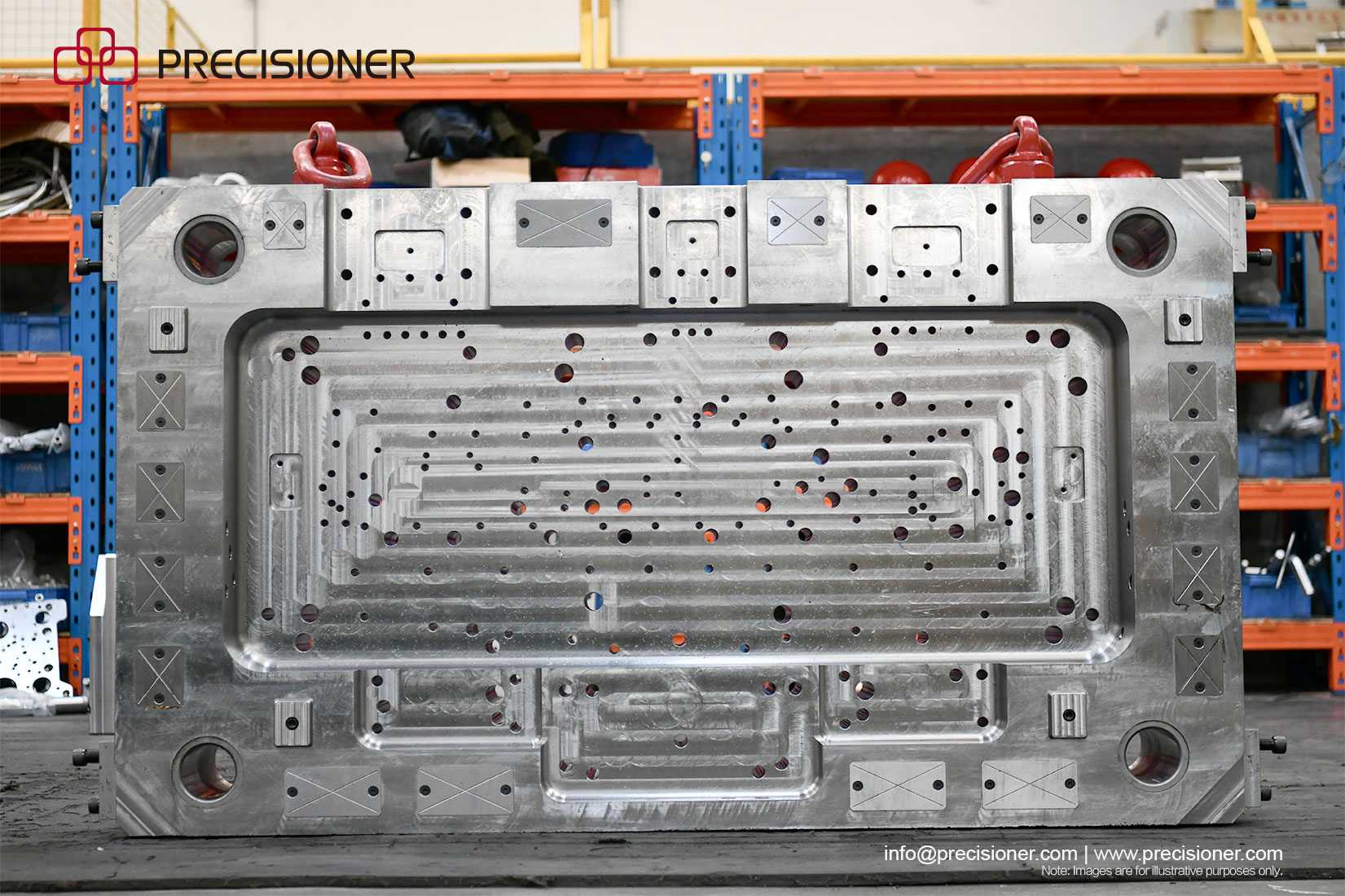
What’s your experience with flash reduction in high-pressure die casting? Let’s discuss below.
info@precisioner.com