


Introduction:
This is a common frustration we hear from many die casting manufacturers. But the problem is usually not with the software itself—it lies in one of the most overlooked parameters: the Interfacial Heat Transfer Coefficient between the casting and the mold.
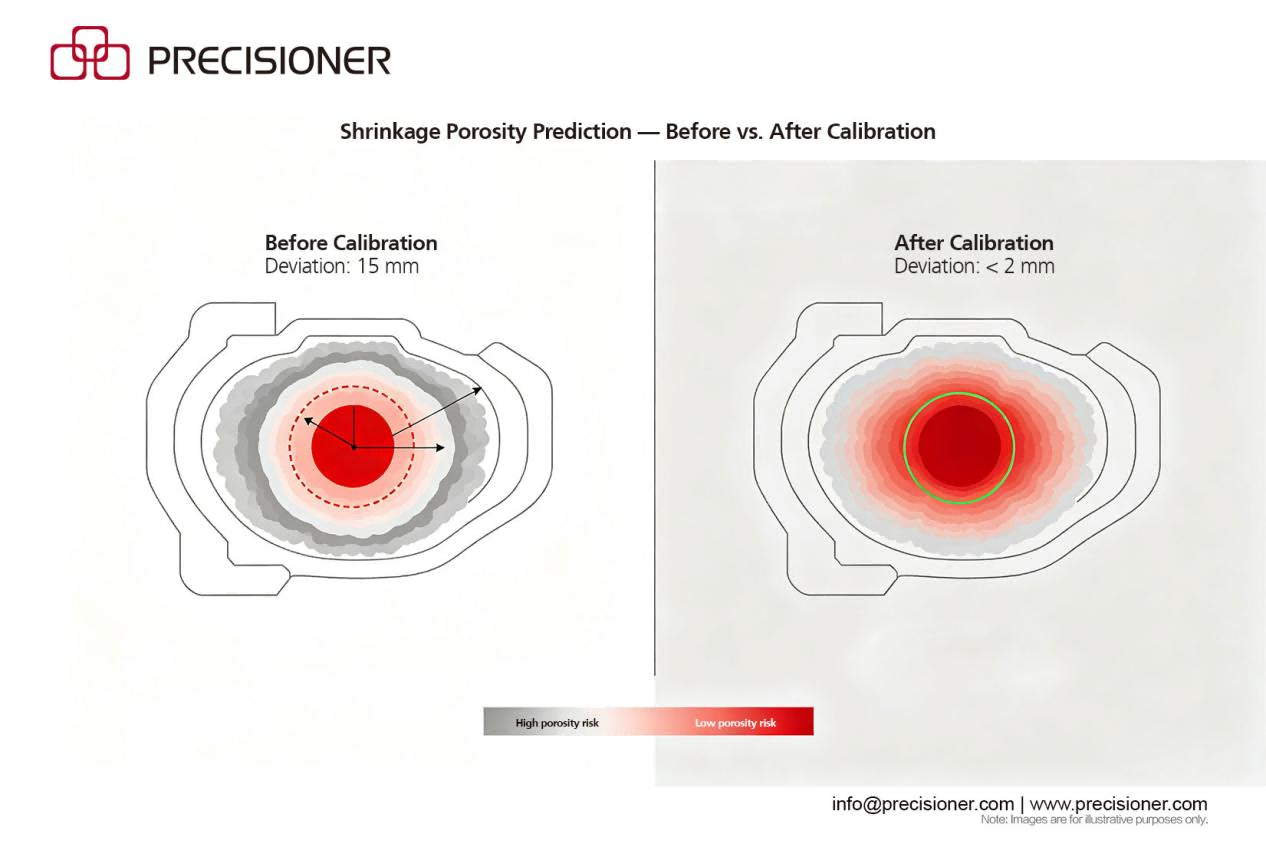
The same mold, with a different release agent, can have an Interfacial Heat Transfer Coefficient (IHTC) that varies by a factor of three. An extra second of spray time can shift the value dramatically. The default settings in commercial software—typically 5,000 to 8,000 W/(m²·K)—are often little more than an educated guess. When you rely on guesses, the results cannot reliably guide your production, sometimes leading to shrinkage porosity predictions that deviate from actual defects by more than 20 mm.
At Precisioner, we take a different approach. We don't guess. We measure. Using thermocouples embedded in our molds, we have accumulated IHTC data from hundreds of production tools under real manufacturing conditions. And we have built a reusable parameter database that our engineers can apply directly to new projects.
What the Measured Data Tells Us
For the same mold, different spray conditions produce dramatically different IHTC values:
· Water-based release agent, 1.5 s spray → IHTC ≈ 8,500 W/(m²·K)
· Water-based release agent, 2.5 s spray → IHTC ≈ 11,500 W/(m²·K)
(Within a certain thickness range, increased film thickness improves heat transfer by enlarging the contact area.)
· Water-based release agent with air blow-off after spray → IHTC ≈ 6,500 W/(m²·K)
· Oil-based release agent → IHTC ≈ 4,200 W/(m²·K)
No spray (initial shots) → IHTC ≈ 1,800 W/(m²·K)
A Case That Saved a Customer Time and Cost
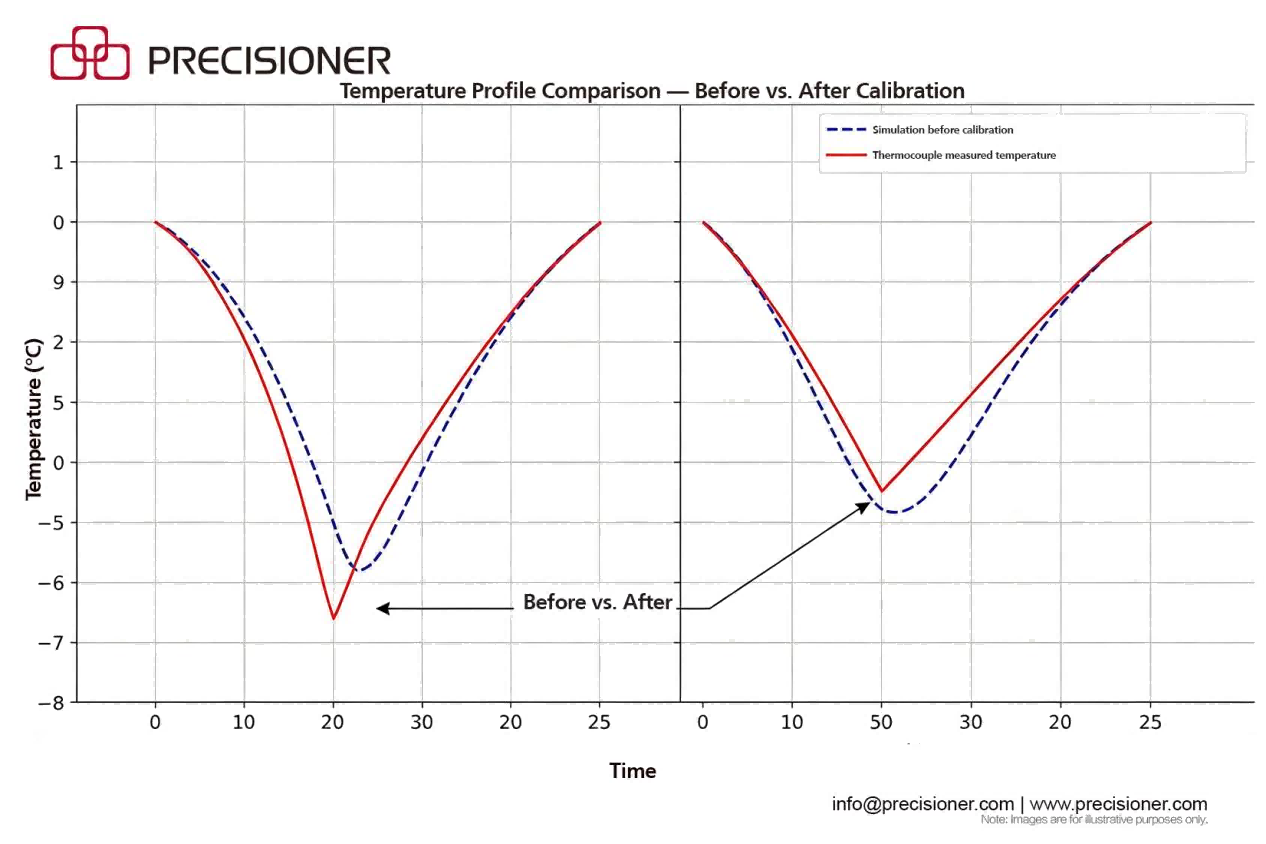
Using the temperature curves recorded by embedded thermocouples during the trial, we back-calculated the actual IHTC for that specific production condition. Instead of the software's default value of 6,000, we found the actual IHTC to be approximately 9,500 W/(m²·K).
We ran a second simulation with the calibrated IHTC. This time, the predicted shrinkage location matched the X-ray results to within 2 mm. based on the calibrated results, we modified the cooling channel layout. The next trial was successful on the first attempt, and the shrinkage porosity rate dropped from 4.5% to 0.6%. Production cycle time did not increase, and the customer did not have to pay for a single design modification or extra trial.
What You Get Is More Than Just a Report
settings table—whether the IHTC was taken from a database, derived from a specific trial, and how each key parameter was determined. You can use this information to verify the credibility of the simulation, or to support your own internal reviews.
Our Perspective
If you are facing challenges with simulation accuracy on complex parts, or have questions about cooling and shrinkage porosity, we would welcome the opportunity to discuss whether our database contains a ready-to-use solution for your specific operating conditions.
Precisioner Engineering Team
info@precisioner.com